Currently Empty: $0.00


0 Comments
In the world of luxury watchmaking, Omega stands as one of the most respected and influential brands. Renowned for its exceptional precision, groundbreaking innovations, and timeless designs, Omega has earned a reputation that extends far beyond the watch industry. From a small Swiss workshop to becoming the first watch worn on the Moon, Omega’s journey is a remarkable story of craftsmanship, exploration, and excellence.
The Beginning of a Watchmaking Legacy
Omega’s history began in 1848 when a young watchmaker named Louis Brandt established a small workshop in La Chaux-de-Fonds, Switzerland. Initially focused on producing high-quality pocket watches, Brandt quickly gained recognition for his dedication to precision and superior craftsmanship.
From its earliest days, the company was driven by a commitment to quality and innovation, values that continue to define the Omega brand today.
A Revolutionary Breakthrough in 1894
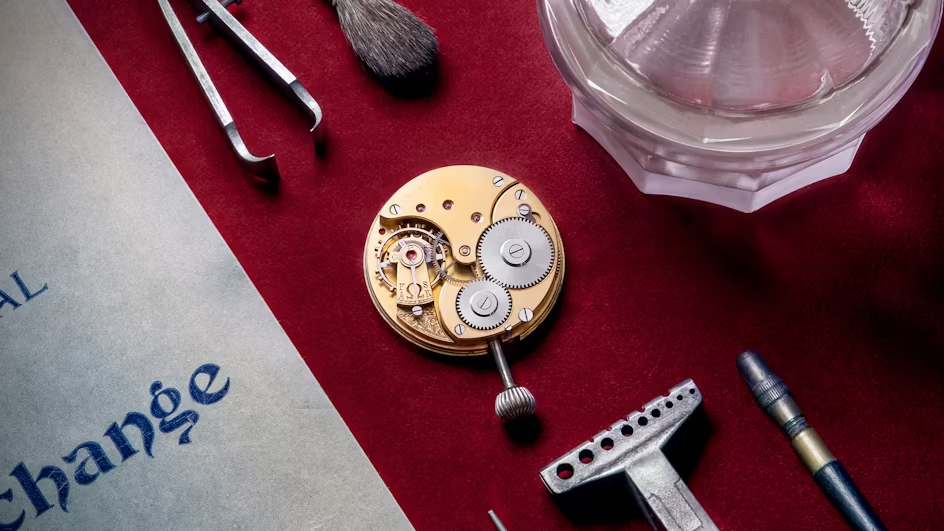
A major milestone in Omega’s history came in 1894 with the introduction of the revolutionary 19 Ligne caliber movement.
This movement featured exceptional accuracy and a standardized design that simplified servicing and maintenance, setting new standards for the watchmaking industry. Its success was so significant that the company adopted “Omega” as its official brand name.
The word “Omega,” the final letter of the Greek alphabet, symbolizes ultimate achievement and perfection—an ideal that perfectly reflects the brand’s philosophy.
A Leader in Precision Timekeeping
Precision has always been at the heart of Omega’s identity.
Recognized for its outstanding timing capabilities, Omega became closely associated with major international sporting events. In 1936, the brand was officially appointed as the Olympic Games’ timekeeper, a role it continues to hold today.
Over the decades, Omega has consistently pushed the boundaries of sports timing technology, evolving from traditional mechanical systems to advanced electronic and digital timing solutions. This long-standing partnership has further established Omega as a global leader in precision timekeeping.
The Transition from Pocket Watches to Wristwatches
As wristwatches gained popularity in the early 20th century, Omega successfully adapted to the changing market. The company embraced the growing demand for wristwatches and invested heavily in research, development, and innovation.
This transition marked the beginning of Omega’s rise as one of the world’s leading wristwatch manufacturers.

The Legendary Professional Collection of 1957
The year 1957 represents one of the most important chapters in Omega’s history.
During this year, Omega introduced three professional watch models that would later become legends in their respective fields:
Speedmaster
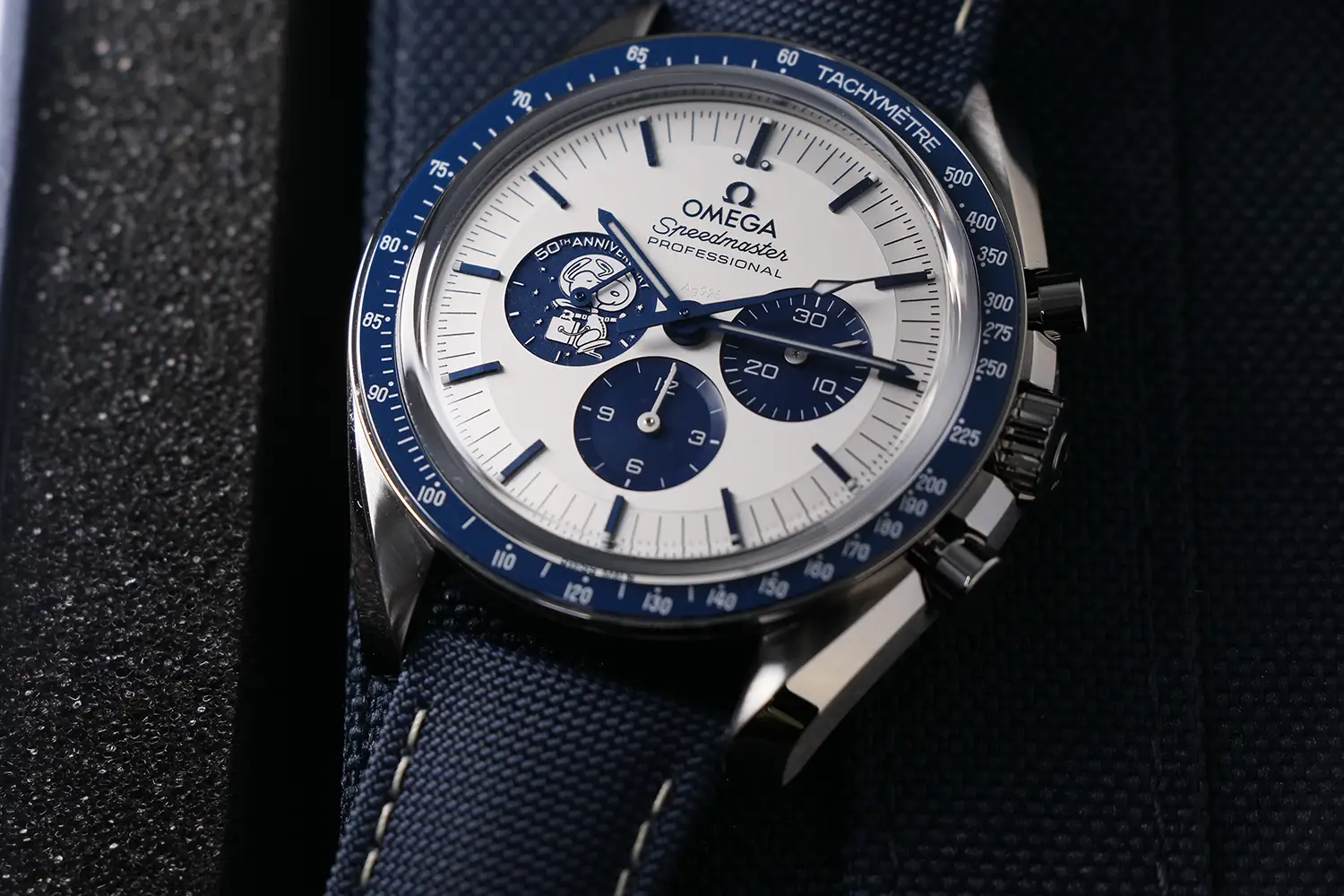
Originally designed for motorsport enthusiasts, the Speedmaster featured a highly accurate chronograph and exceptional readability. It would later become Omega’s most iconic watch.
Seamaster 300
Built for professional divers, the Seamaster 300 offered outstanding water resistance and durability, quickly establishing itself as a benchmark in dive watch design.
Railmaster
Created for engineers, scientists, and railway professionals, the Railmaster was designed to resist strong magnetic fields and ensure reliable performance in demanding environments.
Together, these three watches laid the foundation for Omega’s reputation as a manufacturer of professional tool watches.
The First Watch on the Moon
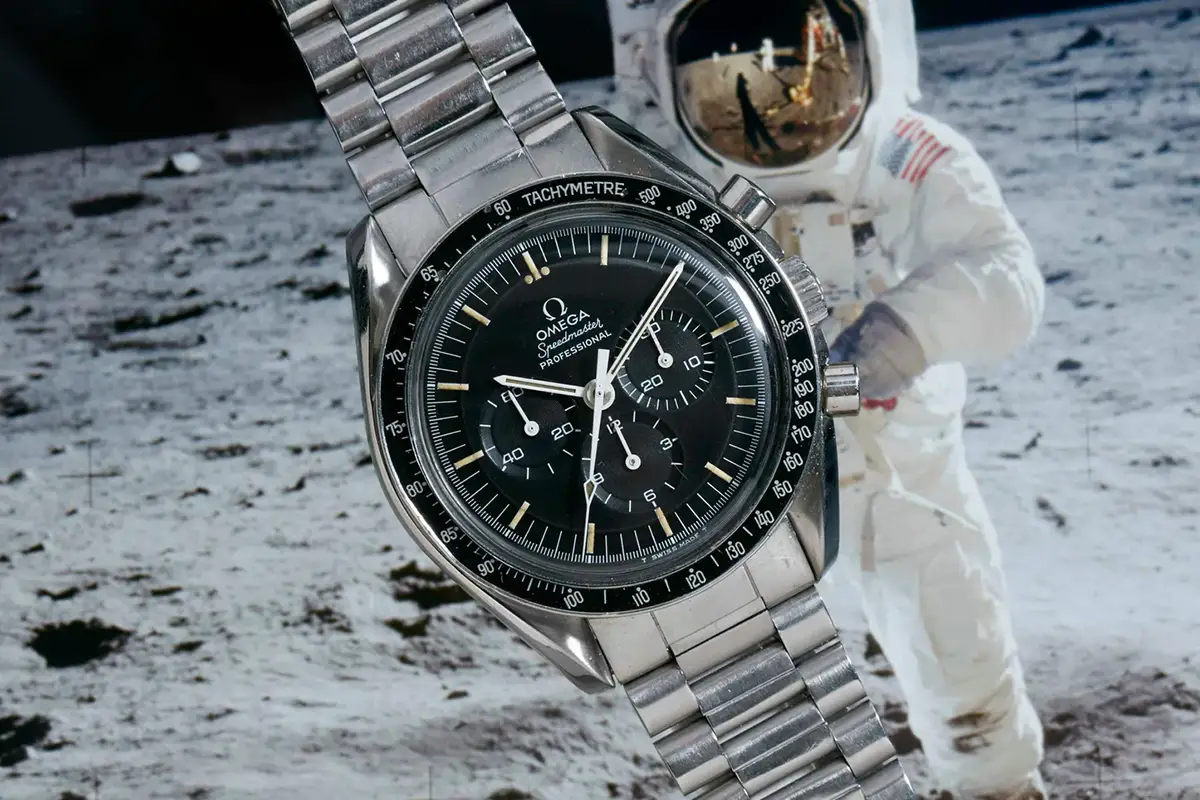
Perhaps the most famous achievement in Omega’s history occurred during NASA’s Apollo 11 mission in 1969.
After undergoing a series of rigorous tests involving extreme temperatures, vibrations, shocks, and vacuum conditions, the Omega Speedmaster was selected as the official watch for NASA astronauts.
On July 21, 1969, when humanity took its first steps on the lunar surface, astronauts were wearing Omega Speedmaster watches.
This historic accomplishment earned the Speedmaster the legendary nickname “Moonwatch” and cemented Omega’s place in space exploration history. More importantly, it demonstrated the watch’s extraordinary reliability under the most demanding conditions imaginable.
Iconic Collections That Define Omega
Today, Omega offers a diverse range of watch collections, each with its own unique character and purpose.
Seamaster Collection
Known for its maritime heritage, the Seamaster combines professional diving capabilities with contemporary elegance.
Speedmaster Collection
Famous for its role in lunar exploration, the Speedmaster remains one of the most celebrated chronographs ever created.
Constellation Collection
Recognized for its precision and refined aesthetics, the Constellation is a symbol of luxury and sophistication.
De Ville Collection
The De Ville showcases Omega’s expertise in elegant dress watches, blending classic design with advanced watchmaking technology.
These collections continue to attract watch enthusiasts, collectors, and professionals around the world.
Pioneering Watchmaking Technology
Omega’s success is built not only on its history but also on its relentless pursuit of innovation.
Over the years, the brand has introduced several groundbreaking technologies, including:
- Co-Axial Escapement
- Master Chronometer Certification
- Anti-Magnetic Movement Technology
- Silicon Balance Springs
These advancements have significantly improved accuracy, durability, and long-term reliability, reinforcing Omega’s position at the forefront of modern watchmaking.
Conclusion
From a small Swiss workshop founded in 1848 to becoming one of the most recognized names in luxury watchmaking, Omega has consistently pursued excellence in precision, innovation, and craftsmanship.
Whether serving as the official timekeeper of the Olympic Games or accompanying astronauts on humanity’s first journey to the Moon, Omega has repeatedly demonstrated its ability to push the boundaries of what is possible.
Today, an Omega watch is more than a timepiece—it is a symbol of heritage, innovation, and the enduring spirit of exploration.